
Eave Protection That Stops Decay at the Source
Soffit and fascia repair in Fort Myers for homes where damaged eave assemblies are allowing moisture and pests into wall cavities and attic spaces
Cracked soffit panels, rotted fascia boards, and gaps at the eave line are not cosmetic problems—they are entry points for moisture and insects into the attic and wall assembly behind them. A Tip Top Rescreen repairs soffit and fascia across Fort Myers, replacing damaged sections, restoring ventilation, and sealing gaps that allow water and pest infiltration to continue unchecked. The repair process begins with a full inspection of the eave structure rather than a surface-level look, because the visible damage on the exterior often reflects a deeper deterioration in the material behind it.
During a repair, damaged or rotted sections are removed entirely before new material goes in—patching over deteriorated soffit or fascia leaves the underlying structure in the same compromised condition and the repair will fail again. Ventilation screens embedded in the soffit are checked for blockage and replaced if they have been clogged or crushed, which matters because blocked soffit vents restrict airflow through the attic assembly and contribute to moisture accumulation in the cavity above. All fasteners are re-driven or replaced, and gaps at panel edges and corners are sealed against water and pest entry before the job is signed off.
Arrange a free estimate to have your soffit and fascia inspected and a specific repair plan outlined for your property.
What the Repair Process Actually Addresses
Soffit and fascia assemblies serve two functions simultaneously: they close the eave structure against water entry and they provide the ventilation pathway that allows attic air to move. When one function is compromised, the other typically follows. A fascia board that has softened from moisture exposure loses its grip on gutter hangers, which pulls the gutter out of position and redirects roof runoff against the eave rather than into the channel—accelerating the same rot it was already failing to stop. A Tip Top Rescreen's assessment process separates surface damage from structural deterioration so that the repair scope reflects what the eave assembly actually needs, not just what is visible from the ground.
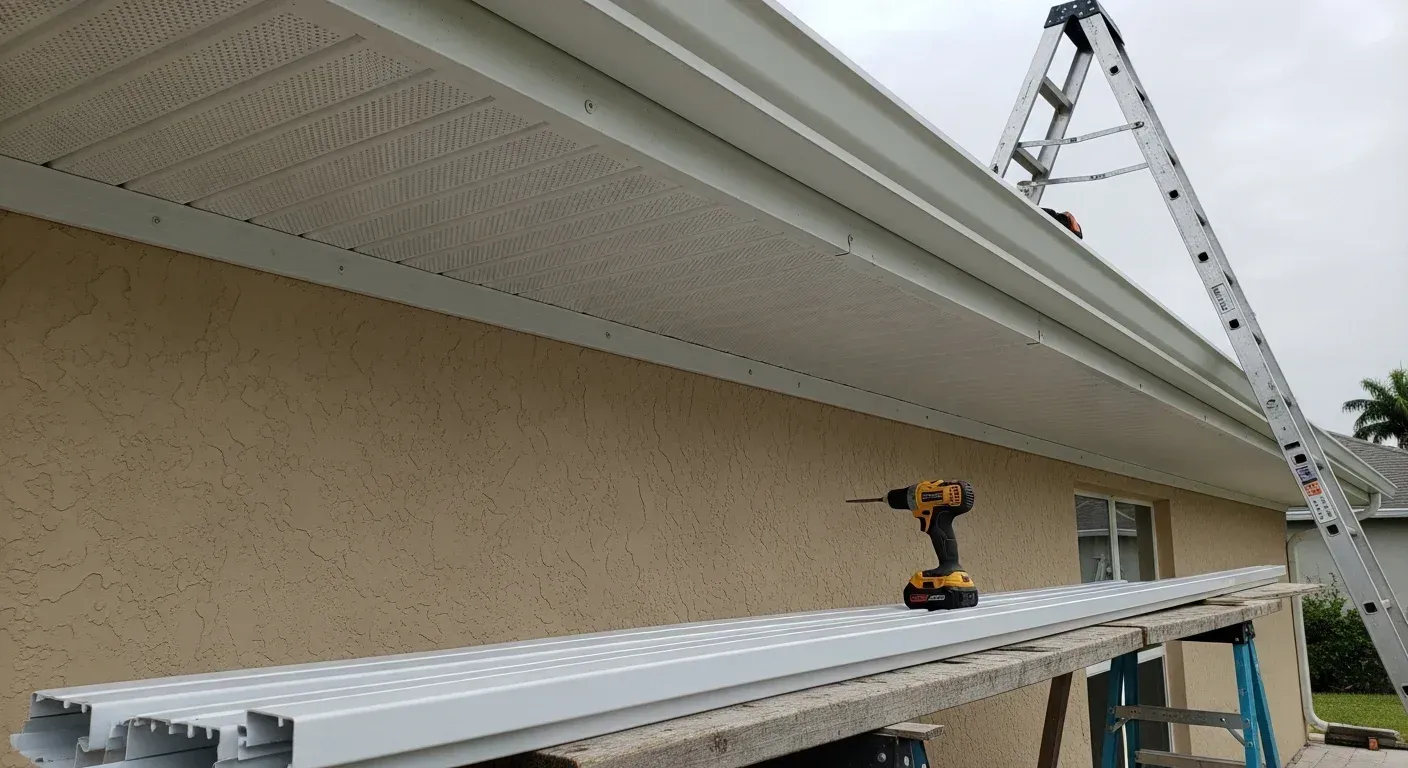
Once repairs are complete, the differences are specific and observable: soffit panels sit flush without gaps or sag, fascia boards are solid to the touch and hold fasteners cleanly, and ventilation screens are open and unobstructed. Older construction in areas like Bonita Springs and Estero—where homes built in the 1980s and 1990s used materials that have now cycled through decades of humidity exposure—frequently presents with fascia rot that has progressed further than the exterior surface suggests, which is why the inspection sequence prioritizes probing the material rather than visual assessment alone.
Repair work covers the removal and replacement of damaged sections, fastener replacement, vent servicing, and gap sealing as a complete scope rather than individual line items. The distinction matters because a repair that replaces the soffit panel without addressing the ventilation screen condition leaves the attic ventilation problem in place, and a repair that replaces the fascia without sealing the corner gap leaves the pest entry point open.
What Property Owners Ask About Soffit and Fascia Work
The questions below cover how soffit and fascia repairs are assessed and completed, what decisions are made during the process, and what a properly finished eave assembly looks and functions like.
How is the extent of soffit or fascia damage determined before the repair begins?
The inspection involves probing the fascia and soffit material rather than relying on visual observation alone, because rot progresses through the interior of the board before it becomes visible on the painted surface, and the repair scope is set based on where the material is structurally sound rather than where the discoloration stops.
Why does soffit repair include checking the ventilation screens?
Soffit vents are the intake point for the attic's ventilation system, and screens that have been blocked by debris, crushed during previous work, or corroded shut restrict airflow in the attic cavity, which contributes to moisture accumulation and accelerates decay in the roof assembly above; clearing or replacing them is part of restoring the soffit to full function.
What causes fascia boards to rot even when gutters appear to be working?
Gutters that have pulled slightly away from the fascia—even a fraction of an inch—allow water to run behind the gutter channel and sit against the fascia surface rather than draining into the gutter, and that sustained contact is enough to initiate rot in wood fascia even when the gutter itself appears intact from below.
How does the construction era of a Fort Myers home affect a soffit repair?
Homes built before the mid-1990s in Fort Myers and surrounding Lee County communities commonly used wood-based soffit and fascia materials that are more susceptible to sustained moisture exposure than the fiber cement and aluminum products used in later construction, so repair scopes on those properties tend to involve more complete section replacement rather than targeted patching.
What should you check after soffit and fascia repair is finished?
Confirm that soffit panels are flush and without gaps at edges or corners, that fascia boards are solid when pressed and show no flex or give, that ventilation screens are open and unobstructed, and that there are no gaps at the junction between the fascia and the roof edge where water or insects could re-enter.
A Tip Top Rescreen also performs soffit and fascia repair in Lehigh Acres, North Fort Myers, Cape Coral, Estero, Naples, and Bonita Springs. If your eave assembly shows signs of rot, sagging panels, loose fascia, or blocked vents, contact A Tip Top Rescreen at (239) 440-6857 to schedule a free assessment and have the full condition of your soffit and fascia evaluated before the damage progresses further into the wall cavity.