
Structural Assessment Comes Before Any Repair Scope
Lanai repair in Fort Myers for enclosures with frame deterioration, foundation settlement, or storm-related structural damage
Lanai enclosures on properties throughout Fort Myers show a characteristic deterioration pattern: frame sections corrode at joints first, foundation connections develop separation over time, and storm loading accelerates damage that was already progressing slowly. The visible result—sagging screen panels, warped frame sections, or a frame that has pulled away from the home at the header—reflects underlying conditions that a screen patch alone won't address. A Tip Top Rescreen repairs residential and commercial lanais in Fort Myers, working from an on-site inspection that covers frame condition, foundation integrity, and connection points before any scope is established.
For standard residential repairs, the inspection determines whether damage is limited to screening and minor frame sections or whether structural elements—posts, footings, or foundation connections—are involved. For high-rise or commercial lanais, engineering and permitting precede the repair work when structural damage is confirmed. A Tip Top Rescreen's primary work for the past five years has been high-rise lanai restoration on multi-unit buildings, which means the crew handles complex structural repair regularly alongside residential patch and frame work.
Set up an on-site inspection to assess your lanai's current condition and determine what the repair scope involves.
The Difference Between Surface Repair and Structural Restoration
On multi-unit buildings in Port Charlotte and Marco Island, as well as throughout Lee and Collier counties, lanai structural repairs involve a distinct process: engineering assessment establishes what load-bearing elements have been compromised, permits are pulled for the structural scope, and then the repair sequence follows the engineering specifications. Pulling out a deteriorated lanai on a high-rise building and installing a new enclosure involves attachment point preparation on the building face, foundation work at the base, and frame installation in a specific sequence—work that requires a crew experienced with elevated structure attachment, not just standard residential framing.
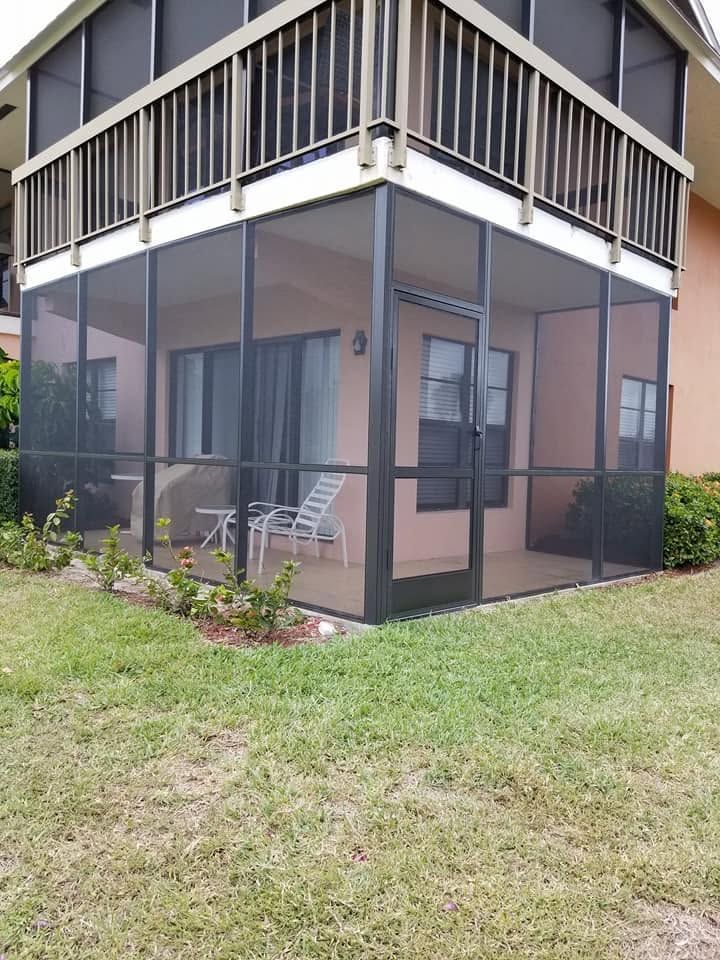
After a properly executed repair, the lanai frame should sit without visible separation from the home at the header and fascia connections, post bases should show no movement when pressure is applied laterally, and screen panels should hold consistent tension without pulling inward at frame edges. Where foundation settlement was repaired, the base of the enclosure should align flush with the existing grade or slab without visible heave or depression.
Repairs are scoped to address only what the inspection identifies as failed or failing—not a blanket replacement of all frame sections when only specific members are compromised. This distinction matters because aluminum frame sections in sound condition that are removed unnecessarily introduce new connection points that can become future failure sites if not reinstalled correctly.
Questions Before Starting Your Lanai Repair Project
These questions cover the inspection process, repair sequencing, and what correctly completed lanai repair looks like—focused on the work itself rather than administrative details.
What does the lanai inspection cover before a repair scope is determined?
The inspection covers frame condition at every joint and mid-span, foundation integrity at post bases and slab connections, the condition of the attachment points where the frame meets the home, and screening damage across all panels. Each of those elements can require a different repair approach.
How is foundation settlement on a lanai repaired correctly?
Settlement that has caused post base movement or slab cracking requires the post to be stabilized or the footing to be repoured to the correct depth before any frame repair is done above it. Repairing frame sections over a settling foundation means the same damage recurs as settlement continues.
When does a lanai repair in Fort Myers require engineering and permitting?
Structural repairs—those involving posts, footings, foundation connections, or load-bearing frame members—require permits. On high-rise or commercial properties, engineering is required before structural scope can be determined. Screen and minor frame replacement on residential enclosures typically does not require a permit, but the inspection will confirm which threshold applies.
What causes lanai frames to pull away from the home at the header?
Header separation typically results from expansion and contraction cycling in the aluminum frame over years, inadequate original fastener depth into the home's structure, or corrosion at the fastener points where dissimilar metals were used at attachment. Refastening without replacing corroded hardware repeats the failure.
How do you identify whether a screen replacement will hold on a frame that's been repaired?
New screening holds correctly when the frame sections are plumb, straight, and rigid at connection points. A frame section that flexes when hand pressure is applied at the mid-span will not hold screen tension properly and needs replacement rather than rescreening.
A Tip Top Rescreen also repairs lanais in Estero, North Fort Myers, Cape Coral, Naples, and Bonita Springs. If your lanai is showing signs of frame separation, foundation movement, or structural damage beyond surface screening, A Tip Top Rescreen can inspect the enclosure and establish what the repair requires before any work begins.