
Repairs That Address Frame Damage, Not Just Screen Tears
Pool cage repair in Fort Myers for enclosures with torn screening, corroded aluminum, or damaged posts and footings
A torn screen panel is the most visible sign that a pool cage needs attention, but it's rarely the whole problem. Corrosion along aluminum frame sections and movement at post footings often develop alongside visible screen damage, and addressing only the surface without inspecting the structure means the cage continues to deteriorate between repairs. A Tip Top Rescreen repairs both residential and commercial pool cages in Fort Myers, assessing damage on site before determining what actually needs to be replaced.
The repair process starts with a site inspection covering screening condition, frame section integrity, post condition, and footing stability. A Tip Top Rescreen repairs or replaces only what the assessment identifies as damaged or failing—patch work on torn screens where the frame is sound, frame section replacement where corrosion has compromised the aluminum, and structural footing repair where post movement is found. For structural damage on larger or multi-unit installations, scope is determined before any work begins to ensure repairs are executed to code.
Arrange a damage assessment to identify what your cage needs and how the repair will be scoped.
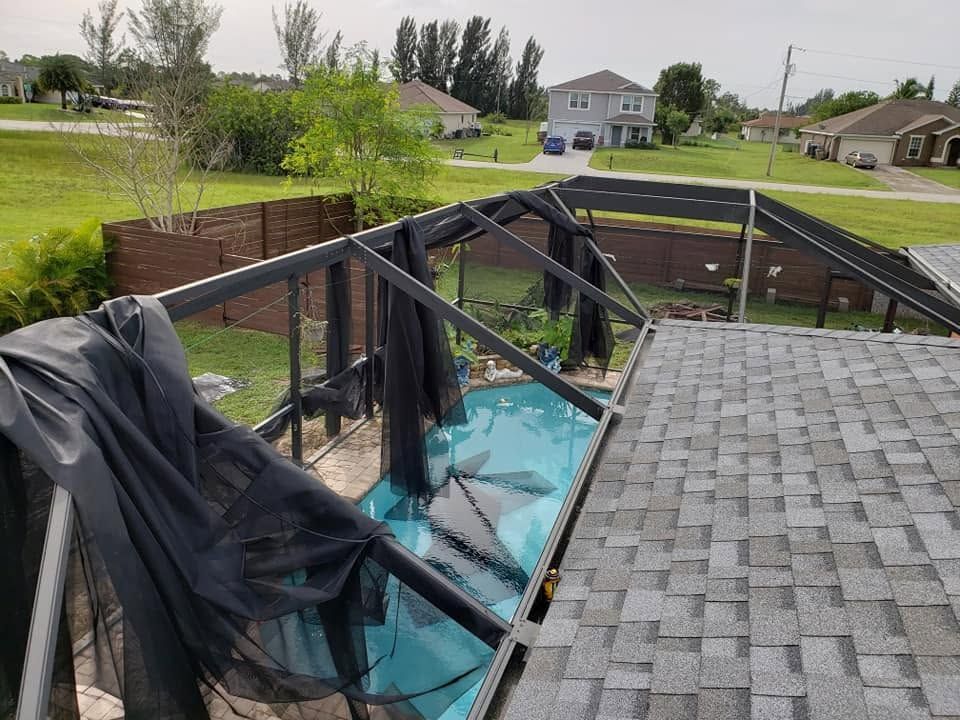
Why Pool Cage Damage Goes Beyond What You Can See
Pool cages on older installations throughout Fort Myers and North Fort Myers show a consistent pattern: salt air accelerates oxidation at frame joints and post bases well before the corrosion becomes visible through paint or coating. By the time a homeowner notices chalking or pitting on an aluminum frame member, the connection points inside the joint have often already lost structural integrity. This is why an inspection-first approach matters—what looks like a screen replacement job may include frame sections that need replacement to hold new screening at proper tension.
After repairs are completed, the cage should show consistent screen tension across all panels with no sagging or buckling at the frame edges, and repaired frame sections should align flush with existing members without visible gaps at connection points. Post bases that received footing repair will no longer show movement when lateral pressure is applied at the frame—an easy check that confirms foundation work was done correctly.
On multi-unit residential buildings in the Bonita Springs area and throughout Lee County, lanai and pool cage structural repairs require engineering assessment before work proceeds, which affects how the scope is established and what permits are pulled. Residential jobs typically don't require engineering unless post or footing replacement is involved, but the inspection will identify whether that threshold applies to your specific cage condition.
Answers About How Pool Cage Repair Is Done
The questions below focus on how pool cage repair actually works—what gets inspected, what drives repair decisions, and what proper finished work looks like.
What does the on-site inspection cover before repair work begins?
The inspection covers screening condition across all panels, frame section integrity at joints and mid-spans, post condition from base to top rail, and footing stability at the ground level. Damage to any of these components affects whether a simple screen patch is appropriate or whether structural work is also needed.
How is corroded aluminum frame material handled during repair?
Sections with structural corrosion are cut out and replaced with matching aluminum extrusion rather than patched or coated over. Coating corroded aluminum extends its appearance briefly but does not restore the load-bearing capacity of a compromised joint or frame member.
When does a pool cage repair require permitting in Fort Myers?
Structural repairs—meaning post replacement, footing work, or frame section replacement that affects load-bearing members—typically require a permit. Screen-only replacement on an otherwise sound frame generally does not, but the on-site assessment confirms which category your repair falls into before work begins.
What causes post footings to fail on an existing pool cage?
Post footings can fail from foundation erosion, improper original depth for the flood zone, or corrosion at the embedded section of the post where it enters the concrete footing. Movement at the base of a post is the visible indicator that footing integrity has been compromised.
How do you confirm that repaired screening has been installed at the correct tension?
Properly tensioned screen panels sit flat across the frame opening without visible sag at the center and without pulling the frame inward at the edges. Overtensioning distorts the frame; undertensioning allows screen movement that accelerates wear at the spline edges.
A Tip Top Rescreen also repairs pool cages in North Fort Myers, Cape Coral, Estero, Naples, and Bonita Springs. To evaluate your cage's condition and determine what repair scope applies, contact A Tip Top Rescreen to schedule an on-site inspection.